Garden services for Grays Inn Holborn courtyards
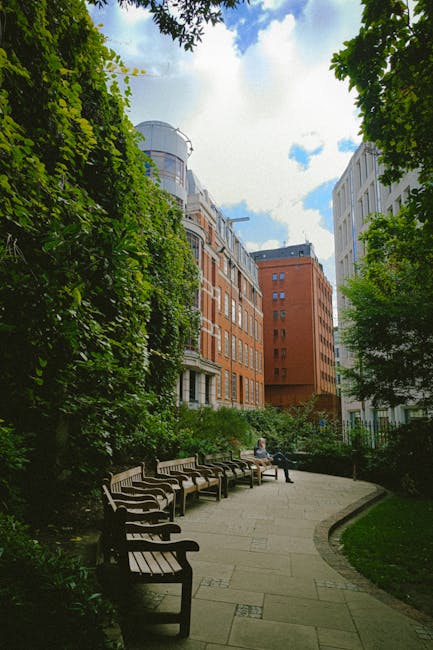
Courtyards in Grays Inn, Holborn have a particular charm: enclosed, elegant, often shaded, and usually busy in a way that only central London spaces can be. They can also be awkward. A narrow bed that never quite dries out, a few tired shrubs, paving that needs careful cleaning, or a small lawn patch that looks fine one week and ragged the next. Garden services for Grays Inn Holborn courtyards are about handling those realities properly, not just making things look neat for a day.
If you manage a residential courtyard, an office garden, a communal space, or a private interior yard, the goal is usually the same: keep it attractive, safe, and usable without turning it into a maintenance headache. That means choosing the right routine, the right seasonal work, and the right level of intervention. In this guide, we'll walk through how courtyard garden care works, what to prioritise, where the risks are, and how to make sensible decisions for a London setting that rarely gives you much spare room to work with.
Why Garden services for Grays Inn Holborn courtyards Matters
Courtyards are not just smaller gardens. They behave differently. Light levels can be patchy, airflow is limited, access is tighter, and hard surfaces tend to dominate. That creates a different maintenance pattern from a suburban front garden or a larger rear plot. In practice, small issues can become visually loud very quickly. One overgrown hedge, one neglected drain cover, or one patch of slippery moss can change the whole feel of the space.
For Grays Inn and the surrounding Holborn area, this matters even more because many courtyards sit between period buildings, offices, entrances, and shared communal areas. People see them up close. They are not something you only glance at from the pavement. Let's face it, a courtyard can make a very strong first impression, for better or worse.
Regular garden services help preserve the character of the space while keeping it practical. That might mean routine garden maintenance, precise hedge trimming, careful lawn mowing for smaller turf areas, or a more involved garden clearance after a busy season. The point is consistency. Courtyards usually look their best when they are managed steadily rather than rescued in a hurry every few months.
There is also a wellbeing angle. Green, well-kept communal space gives people a brief pause from the hard edges of London life. Even a modest courtyard can soften noise, lift a mood, and make a building feel considered rather than neglected. You notice it on a wet Tuesday morning. You really do.
How Garden services for Grays Inn Holborn courtyards Works
Good courtyard garden care starts with assessment. A professional will usually look at access points, planting condition, drainage, surface types, sun and shade patterns, and how the space is used. A private courtyard used occasionally needs a different plan from a shared courtyard that receives daily foot traffic.
From there, work is usually divided into recurring tasks and seasonal tasks. Recurring work includes sweeping, pruning, light weeding, tidying beds, checking planters, and keeping edges crisp. Seasonal work might include cutting back planting in late winter, refreshing mulch, repairing tired borders, or reshaping plants that have grown into windows, paths, or one another.
Some courtyards need a soft-touch approach. Others need a full reset. If the space has become cluttered or unruly, a one-off clearance may be the starting point before ongoing care resumes. In those cases, a service such as garden clearance is often the most practical first step, because it clears the way for everything else.
Where the courtyard includes turf, low-maintenance grass, or small decorative lawn sections, a maintenance plan may include lawn mowing at the right frequency, not just whenever someone remembers. In compact spaces, timing matters more than people think. Miss a fortnight and the difference can be surprisingly obvious.
If the area is being improved rather than simply maintained, you may also need planting redesign, layout changes, or surface upgrades. In that case, broader support from landscape gardening or landscaping can help turn a tired courtyard into something more usable and easier to care for. Sometimes the best maintenance solution is a better layout. A bit obvious, but true.
Key Benefits and Practical Advantages
Courtyard garden services offer more than appearance. They protect the space from the kind of slow decline that often goes unnoticed until the whole area looks shabby. Here are the main advantages.
- Better presentation: clean lines, tidy planting, and controlled growth make a courtyard feel cared for.
- Safer surfaces: moss, leaf build-up, loose debris, and blocked drains can create slip hazards if ignored.
- Less disruption: regular visits prevent larger, messier jobs later on.
- Healthier planting: appropriate pruning, watering, feeding, and soil care give plants a better chance in tough urban conditions.
- Improved usability: a well-kept courtyard can be used for breaks, meetings, welcome areas, or quiet time.
- Better long-term value: steady maintenance usually costs less than repeatedly restoring an overgrown space.
There is also a practical value for building managers and residents: fewer complaints. A courtyard that looks half-finished or neglected tends to attract comments. One that is clean, balanced, and seasonal usually blends into daily life in the best possible way. That's the aim, really. It should feel easy to live with.
If privacy, boundaries, or screening are part of the brief, hedge and shrub care becomes important too. Well-managed structure planting can create a calmer feel without making the space look boxed in. For that, hedge trimming is not just cosmetic; it helps control light, shape, and access.
Who This Is For and When It Makes Sense
Garden services for Grays Inn Holborn courtyards are relevant to a wide range of people and properties. If your courtyard sits at the back of a townhouse, inside a residential block, behind an office, or within a managed estate, you are probably already dealing with some version of the same problem: the space matters, but it is easy to neglect because it is small and not always visible.
This service makes sense if you are:
- a building manager responsible for communal outdoor areas
- a landlord or managing agent trying to keep presentation standards consistent
- a resident who wants a private courtyard to feel usable again
- a business looking to improve the arrival experience for staff or clients
- an owner of a paved or partially planted courtyard that needs specialist care
It also makes sense when the space has crossed from "needs a tidy" into "needs a proper plan." Maybe the planting has outgrown its containers. Maybe the paving is starting to green up with algae. Maybe leaves from nearby trees keep collecting in awkward corners. Or maybe the courtyard simply no longer suits how the property is used.
In those moments, a maintenance-only approach may not be enough. It might be time to combine routine care with a one-off improvement or redesign. That could include decking services for a drier sitting area, or a broader seasonal refresh that makes the whole space more workable. Not every courtyard needs a redesign, of course. But some do, and pretending otherwise usually just wastes time.
Step-by-Step Guidance
Here is a practical way to think about managing a courtyard garden in Grays Inn, Holborn. This is the method that tends to keep things under control without overcomplicating it.
- Survey the space properly. Check where water pools, where shade lingers, which plants are struggling, and which surfaces are getting slippery or stained.
- Separate must-do tasks from nice-to-have work. Safety and access issues come first. Then appearance, then enhancement.
- Decide the maintenance rhythm. Some courtyards need weekly attention in growing season. Others are fine with fortnightly or monthly visits.
- Clear out what is no longer working. Dead planting, broken containers, clutter, and blocked corners make the area feel smaller than it is.
- Trim and shape the structural planting. Keep shrubs, hedges, and climbers within bounds so light and access are not compromised.
- Refresh the soil or containers. Courtyards are hard on planting, so feeding, compost replacement, and irrigation checks often make a visible difference.
- Review the surface areas. Paving, gravel, decking, and edging need separate care. Each material behaves differently.
- Set a seasonal plan. Spring and autumn are usually the key moments for tidying, cutting back, and rebalancing the space.
If the courtyard has become cluttered after a long period without attention, starting with a proper clearance is usually wiser than trying to prune around the mess. Once the base condition is corrected, ongoing upkeep becomes much easier. That first reset can feel almost therapeutic, oddly enough.
For properties with a greener focus, it can help to align maintenance with a sustainable routine, including reuse of green waste where suitable and sensible plant choices. If that approach matters to you, the site's recycling and sustainability approach is worth reviewing alongside the work itself.
Expert Tips for Better Results
A few small decisions make a big difference in courtyards. In our experience, the best results come from working with the space rather than against it.
- Use restrained planting. Courtyards usually reward repetition, texture, and structure more than a crowded mix of species.
- Choose plants that tolerate shade or reflected heat. Many courtyard plants suffer because they are selected for a garden that does not really exist.
- Keep containers meaningful, not numerous. Too many pots quickly turn into clutter and make cleaning harder.
- Make drainage a priority. Standing water, even in small patches, can create long-term problems.
- Build in easy access for maintenance. If someone cannot reach the bed or trim the back edge, the whole job becomes awkward.
- Prune for shape, not just size. A balanced outline looks better than simply hacking something down. Harsh pruning often shows, and not in a good way.
One simple rule helps: if a plant blocks light, blocks access, or starts to make the courtyard feel cramped, it is probably overdue for attention. You do not need to be dramatic about it. Just consistent.
For recurring upkeep, many property owners prefer a simple maintenance agreement rather than ad hoc visits. That gives the space a predictable rhythm, which tends to be kinder to both the planting and the budget. If you want a broader view of available options, services overview can help frame what belongs in a routine plan and what belongs in a one-off job.
Common Mistakes to Avoid
Courtyard care fails in fairly predictable ways. The good news is that most of them are avoidable once you know what to look for.
- Overplanting a small space. It can look impressive for a month, then feel crowded and hard to maintain.
- Ignoring access constraints. A courtyard that is hard to reach should be planned differently from an open garden.
- Using the wrong pruning approach. Some plants hate heavy cutting. Others need it. Knowing which is which matters.
- Letting leaf build-up sit too long. In shaded or enclosed spaces, debris decomposes quickly and makes surfaces slippery.
- Forgetting the edges. Borders, corners, and the base of walls are often what make a space look untidy first.
- Choosing style over practicality. A courtyard that looks good but cannot be maintained properly will not stay looking good for long.
Another common mistake is treating every courtyard like a blank canvas. It is not. Existing light, structure, and use patterns all influence what is sensible. A little humility helps. So does a good pair of eyes and a proper plan.
When tree growth becomes a problem in a courtyard setting, especially where branches are affecting light or safety, specialist attention may be needed. In those cases, tree lopping and removal may be more appropriate than trying to manage the issue as ordinary garden tidying.
Tools, Resources and Recommendations
Courtyard work often relies on modest tools used carefully rather than heavy machinery. That is especially true in central London, where access, noise, and proximity to buildings all matter.
| Task | Useful approach | Why it helps in courtyards |
|---|---|---|
| Tidy-up and debris removal | Hand clearing, sacks, controlled sweeping | Protects paving, pots, and access routes |
| Pruning and shaping | By-hand cutting and selective trimming | Better control in tight spaces |
| Turf care | Regular mowing and edge definition | Keeps small lawns neat without scalping |
| Long-term presentation | Planned maintenance visits | Prevents the stop-start cycle that causes decline |
| Major reset | Clearance followed by restoration | Removes backlog before new care starts |
For routine upkeep, a steady maintenance schedule is usually more effective than occasional intensive work. If your courtyard includes mixed planting, consider whether some areas need specialist attention while others only need light care. Not everything has to be tackled at once.
Where the work affects hard landscaping, surfaces, or access routes, a broader property-friendly approach is best. That may involve close coordination with garden maintenance so the whole space stays coherent rather than piecemeal. And if you are comparing scope and cost, the pricing and quotes page is a sensible place to understand how work is usually scoped before anything begins.
Law, Compliance, Standards, or Best Practice
For courtyard garden work in London, compliance is mostly about common-sense safety, proper access management, and treating shared or managed spaces with care. If the courtyard is part of a residential block or commercial property, there may be building rules, site procedures, or health and safety expectations that shape how work is carried out.
Good practice usually includes the following:
- checking access before arrival, including gates, codes, and working hours
- using appropriate personal protective equipment where needed
- keeping paths and entrances clear during the visit
- managing waste responsibly and removing it in line with site requirements
- taking care around fragile paving, historic features, and shared fixtures
- working in line with the provider's own safety processes and insurance cover
In a place like Grays Inn, that careful approach matters. Some courtyards are exposed to public view, some are tightly controlled, and some sit in older buildings where rough handling can cause expensive damage. A cautious, experienced hand is worth more than a rushed one.
When choosing a provider, it is sensible to ask about insurance, safety procedures, and how they handle waste and on-site risks. The business should be able to explain this clearly without sounding defensive. If you want reassurance on those points, reviewing insurance and safety and health and safety policy information is a practical step.
For clients who care about ethical supply chains and responsible working practices, the company's modern slavery statement also helps build trust. It is a quiet but important signal, and these things matter more than people admit at first glance.
Options, Methods, or Comparison Table
Courtyard care usually falls into one of three approaches. The right one depends on the space, the budget, and how the property is used. Here is a simple comparison.
| Approach | Best for | Strengths | Limitations |
|---|---|---|---|
| Light-touch maintenance | Neat courtyards with stable planting | Efficient, lower disruption, easy to schedule | Not enough if the area is already declining |
| Routine maintenance plan | Shared or frequently used courtyards | Consistent appearance, fewer surprises, better plant health | Requires regular attention and coordination |
| Reset plus ongoing care | Overgrown, cluttered, or poorly planned spaces | Creates a clean starting point and long-term structure | More initial work and usually a bigger one-off effort |
In many real cases, the best answer is a mix. A courtyard might need a clear-out now, a redesign of the planting later, and monthly maintenance after that. Trying to force everything into one category can leave the job half done.
If your aim is a more permanent improvement rather than just tidying, the transition from maintenance to redesign is often the moment to bring in landscape gardening support. That is where layout, planting choice, and usability come together.
Case Study or Real-World Example
Imagine a small shared courtyard in Holborn with paving, two narrow borders, a few tired shrubs, and a central area that collects leaves every week. The space is not broken, but it feels neglected. People avoid sitting there. The edges are soft, the planting is uneven, and a patch of moss keeps returning in the same shaded corner.
The first visit focuses on clearance and shape. Debris is removed, the borders are cut back, and the worst of the moss and surface dirt is dealt with carefully. The next step is a more measured tidy-up: the shrubs are thinned, not butchered, the borders are redefined, and the layout is simplified so that maintenance is easier. A better mowing rhythm is established for the small grass section, and the planting is adjusted so it suits the shade rather than fighting it.
What changes? The space starts to feel intentional. It is not suddenly fancy. No miracle transformation, no fairy-tale reveal. But it becomes somewhere people are happy to pass through and, on a good day, pause in. The difference is often in the small things: a clean edge, a drier path, a little more light, a less cluttered feel.
That is the real value of good courtyard services. Not drama. Reliability.
Practical Checklist
Use this checklist before starting or booking work for a courtyard in Grays Inn, Holborn.
- Assess access, gates, timings, and any restrictions.
- Identify urgent safety issues such as slippery surfaces or blocked walkways.
- Decide whether the space needs clearance, routine maintenance, or both.
- Check which plants are thriving and which are failing in the current light conditions.
- Review whether turf, paving, decking, or containers need separate care.
- Confirm waste removal and green waste handling expectations.
- Ask how the work will be scheduled through the seasons.
- Consider whether a layout improvement would make future maintenance easier.
- Confirm insurance, safety, and site procedure information.
- Agree who is responsible for ongoing upkeep after the first visit.
Practical summary: if a courtyard looks hard to maintain, it probably is. The answer is rarely to work harder once and hope for the best. It is usually to simplify the space, match the planting to the conditions, and keep a steady schedule. Simple, but not always easy.
Get a free quote today and see how much you can save.
Conclusion
Garden services for Grays Inn Holborn courtyards are really about balance: enough care to keep the space attractive, enough structure to keep it manageable, and enough restraint to respect the character of the setting. In a tight London courtyard, small decisions matter. The right pruning, the right clearance, the right maintenance rhythm, they all add up.
If you take one thing away, let it be this: a courtyard is at its best when it feels calm, intentional, and easy to look after. That does not happen by accident. It comes from consistent care and a practical plan that suits the space in front of you, not some ideal version of it.
When the work is done well, the space stops asking for attention and simply does its job. That's a good feeling. Quiet, but good.
Frequently Asked Questions
What do garden services for Grays Inn Holborn courtyards usually include?
They usually include courtyard tidying, planting care, pruning, hedge trimming, leaf removal, surface clearing, mowing where relevant, and seasonal maintenance. Some courtyards also need redesign or clearance before routine care can begin.
How often should a courtyard garden be maintained?
It depends on use, planting density, shade, and access. Busy shared courtyards often benefit from regular visits, while smaller private spaces may only need monthly or seasonal attention. The main thing is consistency.
Why do courtyard gardens in Holborn need special care?
They often have limited light, poor airflow, restricted access, and hard surfaces that show dirt quickly. That means normal garden routines do not always work well without adjustment.
Is a one-off garden clearance enough for an overgrown courtyard?
It can be a good start, but usually not enough on its own. After clearance, the courtyard normally needs an ongoing maintenance plan so it does not slide straight back into the same condition.
Can a small courtyard still benefit from landscaping?
Absolutely. Even small spaces can be improved with better layout, planting, edging, drainage awareness, or hard landscaping changes. A smarter layout often makes maintenance much easier.
What is the main difference between garden maintenance and garden clearance?
Garden maintenance is ongoing care: trimming, tidying, mowing, and keeping things in shape. Garden clearance is a bigger reset job for spaces that are overgrown, cluttered, or full of debris.
How do I know if my courtyard needs hedge trimming or tree work?
If plants are blocking light, encroaching on walkways, touching walls and windows, or creating a cramped feel, they may need trimming. Larger or riskier tree growth may require specialist attention rather than routine care.
Are courtyard garden services disruptive?
They do not have to be. Good providers plan access carefully, work neatly, and keep noise and mess under control. In central London settings, a tidy and considerate approach matters a lot.
What should I ask before booking garden services for a courtyard?
Ask about access, timings, insurance, waste removal, safety procedures, maintenance frequency, and whether the work is likely to be a tidy-up, a clearance, or a broader improvement project.
How can I make a courtyard easier to maintain long term?
Keep the planting simple, avoid overcrowding, use materials that suit the site, make access straightforward, and choose a maintenance rhythm that matches the space. Sometimes the best maintenance move is redesigning one awkward corner.
Do courtyard gardens need different plants from normal gardens?
Often, yes. Courtyards can be shadier, windier, or hotter than expected, so plants should be chosen for the actual conditions rather than a general idea of what looks nice.
Can garden services help with sustainability in a courtyard?
Yes. Better plant selection, sensible pruning, responsible waste handling, and avoiding unnecessary replacement all help. Courtyard care can be both attractive and measured, which is usually the better long-term approach.
For more about the wider range of support available, you can also review the company's about us information and the wider services overview. If you are ready to talk through your own courtyard, the next step is simply to make contact and get the ball rolling.